


For Patients
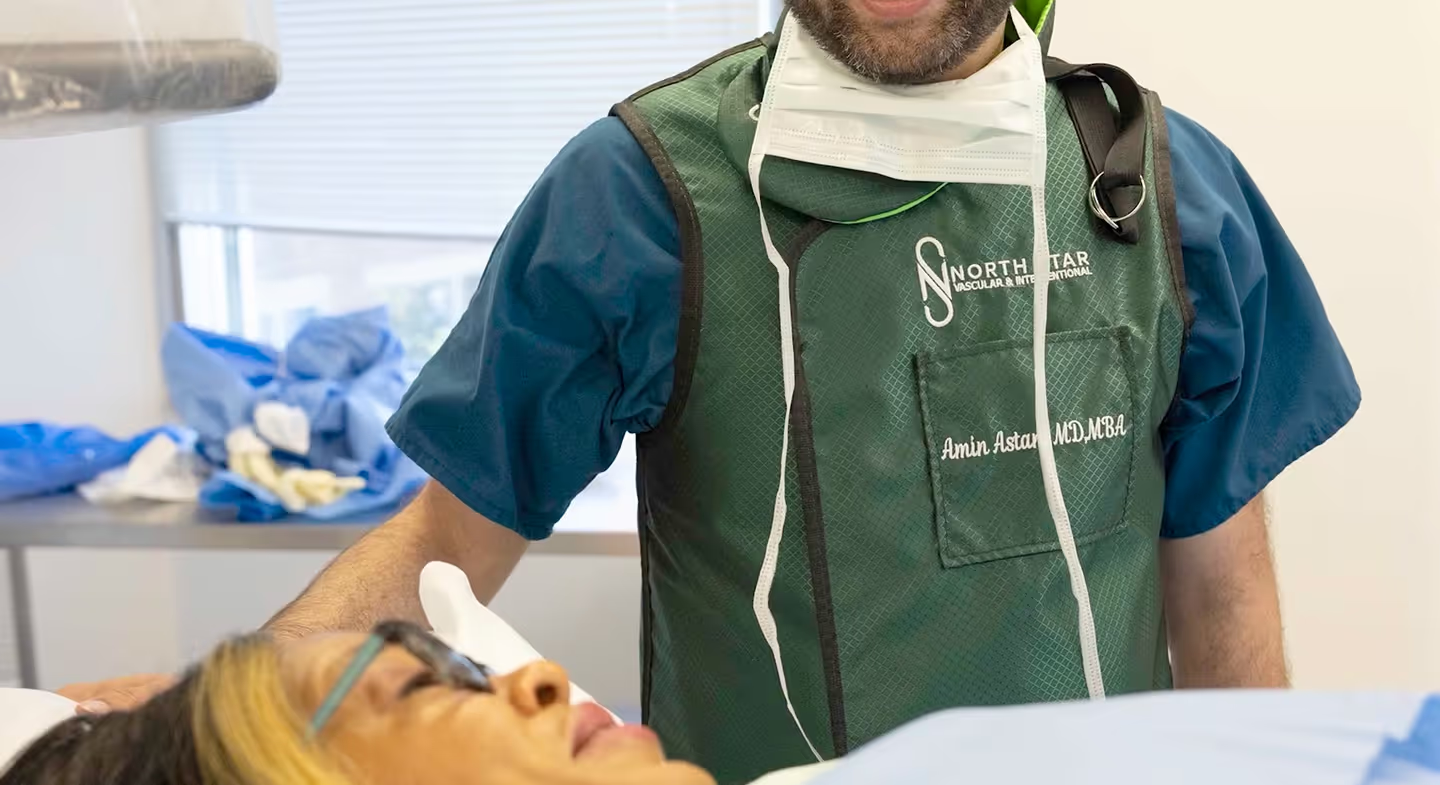
At North Star Vascular & Interventional, we offer options. Options to treat disease and chronic conditions that are highly effective, yet much less invasive than their surgical alternatives. That means less risk, less time spent recovering, less scarring and even less cost!
Our interventional radiology services offer the same high-quality care you’d expect from a leading hospital, but in a more convenient, patient-friendly outpatient setting. That means more personalized attention, less waiting, and less exposure to sick patients.If you think you may be a candidate for one of our procedures, contact us. We’re happy to provide more information and consult with your doctor to determine whether one of our minimally invasive treatments may be right for you.
Quizzes
Patient Evaluation Assessments
Below you can find evaluation quizzes for various diseases. North Star Vascular and Interventional offers treatments for these conditions.

Plantar Fasciitis FADI Questionnaire
Knee Pain WOMAC Questionnaire
Insurance Accepted
Insurance Accepted
This is just a partial list of the insurance plans we accept. If your plan isn’t shown, please reach out to our office at (952) 960-9399 — we’ll be happy to verify your coverage.
Important Note About Insurance Searches

If you contact your insurance company and are told that our clinic is out of network, this is often due to a naming issue.
Our physicians are credentialed with insurance plans under the legal entity name:
Endovascular Physicians of Minnesota, PLLC. Some insurance representatives search by clinic or brand names rather than the provider entity, which can incorrectly show our services as out of network.
What to do:
When speaking with your insurance company or using their online directory, ask them to search for Endovascular Physicians of Minnesota, PLLC instead of our clinic name. If you are still being told we are out of network after searching under this name, please let our team know. We are happy to help clarify coverage and work directly with your insurance plan when needed.









Bill
Pay Bill
If you would like to pay a bill you received from our center, please click the link below to access our patient portal:
Testimonials
Hear From Our Patients


I felt listened to.
They explained things clearly and I never felt rushed.
I felt listened to.
They explained things clearly and I never felt rushed.
I felt listened to.
They explained things clearly and I never felt rushed.

I felt listened to.
They explained things clearly and I never felt rushed.

Frequently Asked Questions
What is interventional radiology?
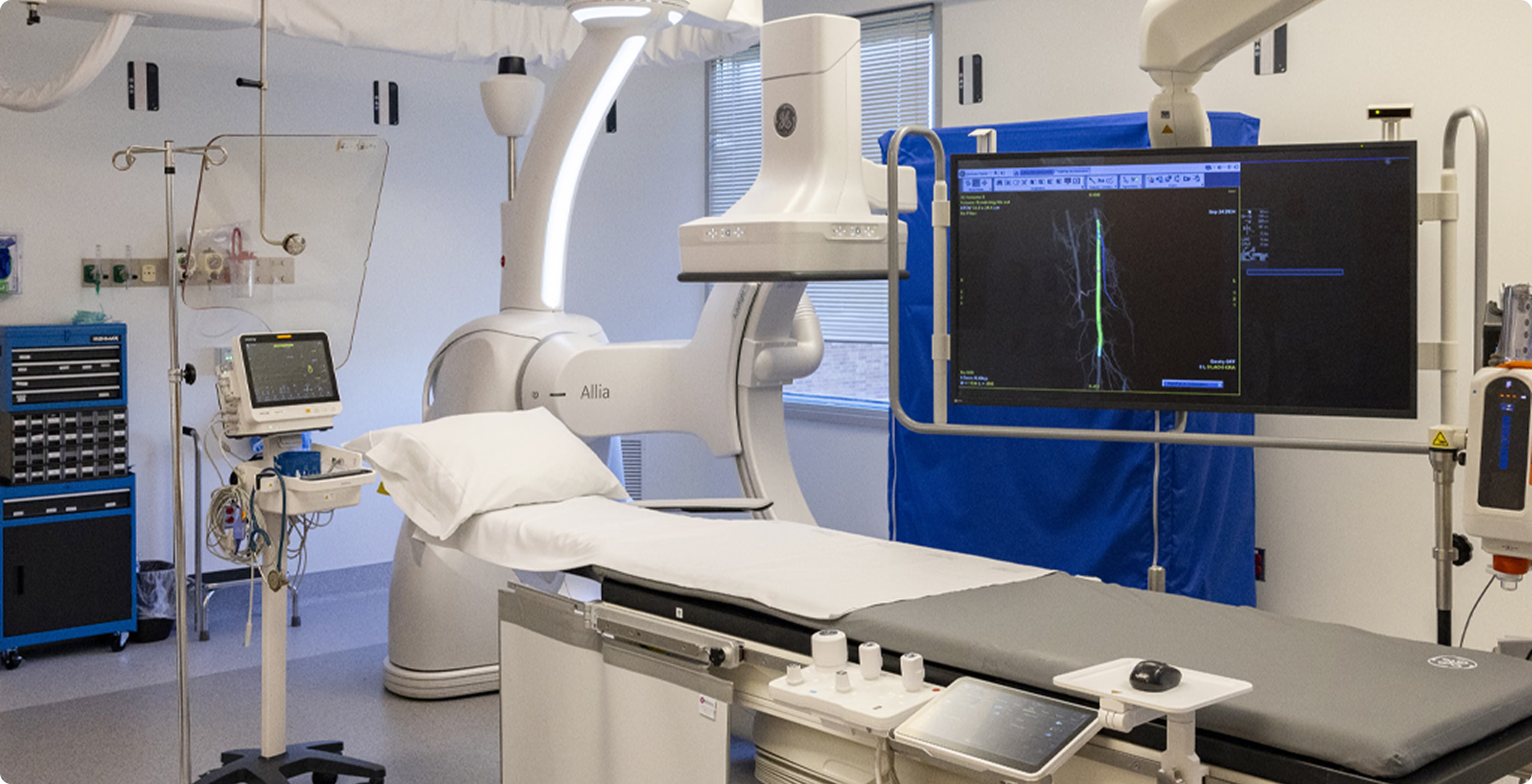
Interventional radiology is a type of medicine where doctors use real-time imaging—like X-rays or ultrasounds—to treat conditions inside the body without major surgery. Instead of large cuts, they use tiny tools like needles and thin tubes (called catheters) to reach the problem area through just a small nick in the skin.
For example, if a blood vessel is blocked, an interventional radiologist can guide a tiny tube into it and use a small balloon to open it—watching the whole thing on a screen. These procedures are usually less painful, have shorter recovery times, and can often be done without an overnight hospital stay.
IR is often used as a first-choice treatment, especially when surgery isn’t needed or other options haven’t worked. It’s a safe, effective way to treat many conditions with less stress on your body.
What conditions can be treated using interventional radiology?
At North Star Vascular & Interventional, we offer minimally invasive treatment for the following conditions:
- Tennis Elbow
- Osteitis Pubis
- Peripheral Artery Disease
- Spine Fractures
- Knee Pain
- Liver Cancer
- Plantar Fasciitis
- Enlarged Prostate
- Varicose Veins
- Uterine Fibroids
- Hemangioma
- Shoulder Conditions
- Pelvic Congestion Syndrome
- Thyroid Nodules
- Varicocele
- Chronic Hemorrhoids
- Goiter
How are IR procedures different from traditional surgery?
Traditional surgery requires an incision in the skin for the surgeon to access the area of the body being treated. The surgeon then uses special instruments like scalpels and orthopedic hardware to perform the treatment. IR procedures are performed from inside the body, usually through the vascular system (arteries and veins) using special catheters and tiny devices. The procedures are guided by medical imaging, such as X-ray and fluoroscopy. As a result, there is a shorter recovery, less pain and less overall trauma to the patient.
Are interventional radiologists considered surgeons?
No, but they require just as much education and training. Some interventional radiologists may also be vascular surgeons, but they have had extensive training in each area to be qualified to perform both imaging-guided procedures and surgical procedures.


Contact us today to schedule an appointment or to speak with one of our knowledgeable staff members.
Book a consultation
Book a consultation


8401 Golden Valley Rd.
Suite 340
Golden Valley, MN 55427
Suite 340
Golden Valley, MN 55427