

Thyroid Artery Embolization (TAE): A Minimally Invasive Approach to Treating Thyroid Nodules and Goiter
What Is TAE?
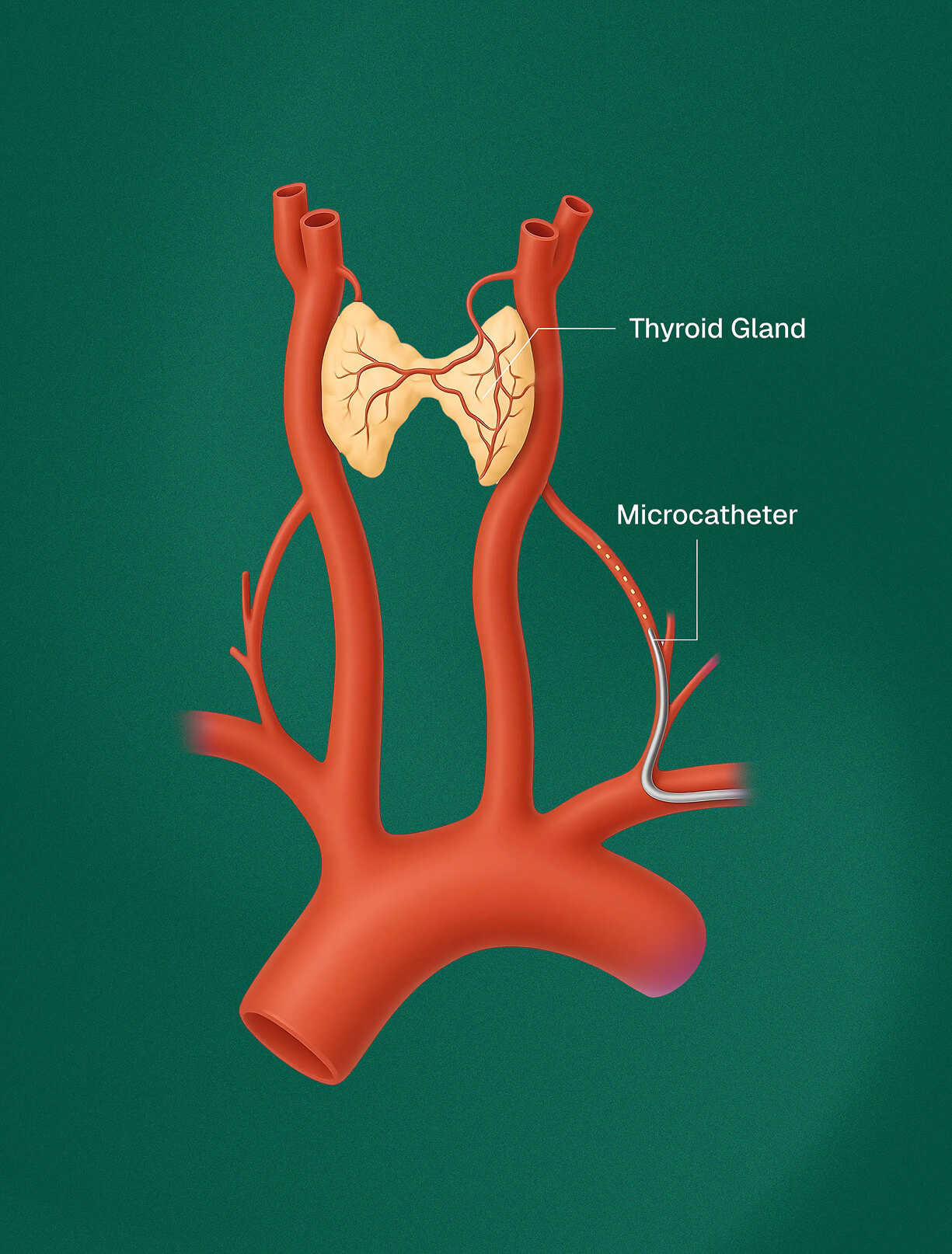
Thyroid Artery Embolization is a cutting-edge, nonsurgical procedure offered at North Star Vascular and Interventional. It provides an effective solution for shrinking goiters by blocking the blood supply to portions of the thyroid gland.
During TAE, a skilled interventional radiologist uses imaging to guide a tiny catheter—either through an artery in the groin or arm—directly to the thyroid’s blood supply. Embolic agents (tiny particles) are then delivered to the targeted arteries, restricting blood flow. Without oxygen and nutrients, the enlarged thyroid tissue gradually shrinks over weeks to months, relieving symptoms and improving the appearance of the neck.

Benefits of Thyroid Artery Embolization
- Minimally invasive: No large incisions or general anesthesia required; only local anesthesia and light sedation are needed.
- Outpatient procedure: patients return home the same day and recover quickly.
- No visible scarring: Only a tiny puncture site is left, typically covered with a Band-Aid.
- Preservation of thyroid function: Many patients retain normal thyroid hormone levels following TAE.
- Significant reduction in goiter size: Studies report 60–80% reduction in goiter volume at 3–6 months post-procedure, with continued improvement thereafter.
- Symptom relief: Patients often notice marked alleviation of neck pressure, difficulty swallowing, and breathing issues as the goiter shrinks
Who Is a Candidate for TAE?
TAE may be recommended for individuals who:
- Have large, symptomatic goiters or multinodular goiters causing compression symptoms
- Cannot or do not wish to undergo surgery due to medical risks or personal preference
- Seek a minimally invasive alternative with less downtime and risk of complications

What to Expect During and After TAE
The procedure typically lasts under an hour. It is performed under local anesthesia and mild sedation. Patients can expect:
- A short recovery time with little to no hospital stay
- Gradual shrinkage of the goiter over the following months
- Regular follow-up visits and imaging to monitor progress
- Less turtlenecks and scarves
- Better sleep
While Thyroid Artery Embolization is generally safe, some patients may experience transient hormone fluctuations, requiring temporary medication adjustments and close monitoring during the first weeks after treatment. Rare complications—such as thyroid storm—are very uncommon but managed promptly by experienced staff.
Why Choose North Star Vascular and Interventional for Goiter Care?
At North Star Vascular and Interventional, our fellowship-trained, experienced physicians specialize in advanced, image-guided, minimally invasive thyroid procedures. We work closely with endocrinologists and head and neck specialists to deliver superior outcomes in a comfortable and supportive outpatient setting.
If you’re struggling with a goiter or thyroid nodules and want to discuss modern, less invasive treatments like Thyroid Artery Embolization, contact North Star Vascular and Interventional for a personalized consultation. Our team is dedicated to helping you restore comfort, confidence, and optimal thyroid health.
FAQ for Thyroid Artery Embolization (TAE)

Thyroid Artery Embolization is a cutting-edge, non-surgical treatment that shrinks parts of the thyroid gland by gently reducing blood flow. It’s done through a tiny pinhole in the skin—no cuts, no scars, and no general anesthesia.
It’s a growing alternative to thyroid surgery or long-term medications, especially for patients with:
- Multinodular goiter
- Hyperthyroidism
- Toxic thyroid nodules
- Graves’ disease (in select cases)
During the procedure:
- A tiny catheter (smaller than a spaghetti noodle) is inserted through a small artery in your wrist.
- Using advanced live imaging, we guide it to the thyroid’s blood supply.
- Tiny particles are released to block specific arteries feeding the overactive or enlarged part of the thyroid.
Over time, that part of the thyroid naturally shrinks, helping to relieve pressure, improve hormone levels, and reduce visible swelling.
- Minimally invasive – no stitches, no scars
- Outpatient procedure – home the same day
- Quick recovery – usually back to normal in 1–3 days
- No thyroid removal – keeps your natural thyroid in place
- Less chance of needing lifelong thyroid medications
- Fewer side effects than surgery or radioactive iodine
This technique is modern, precise, and patient-friendly—and we’re proud to offer it at one of the nation’s leading outpatient interventional clinics.
Yes—and it’s one of the most exciting advancements in thyroid care. While it’s newer than traditional surgery or medications, research is quickly growing and early results are very promising. In expert hands, it’s proving to be a safe and effective option for select patients.
At NSVI, we stay at the forefront of these innovations—using state-of-the-art equipment and world-class expertise to bring you the best care possible.
You may be a great candidate if:
- You have a large thyroid or goiter causing pressure or cosmetic concerns
- You have overactive thyroid symptoms (like anxiety, sweating, or weight loss)
- You’ve had trouble with medications or can’t have surgery
- You want a non-surgical treatment option with minimal downtime
We’ll review your thyroid labs, imaging, and history to help guide the best treatment—tailored just for you.
Most patients say it’s easier than getting a tooth filled. You’ll be relaxed with light sedation and numbing medication. Afterward, you might feel some neck soreness or fatigue for a few days—usually mild and short-lived.
- Rest for a day
- Mild discomfort or fatigue may last 1–3 days
- Most people return to work or daily activities quickly
- No hospital stay needed
Follow-ups will track your progress and thyroid function over time.
Side effects are minimal and uncommon, especially in experienced hands. Some patients may have:
- Mild neck pain or swelling
- Low-grade fever for a day or two
- Temporary voice hoarseness (rare)
There’s no surgical scar, no removal of the whole gland, and less chance of needing lifelong hormone replacement.
| Treatment | No Incisions? | Recovery | Thyroid Preserved? | Hormone Replacement? |
|---|---|---|---|---|
| TAE | Yes | 1–3 days | Yes | Often not needed |
| Surgery | No | 2–4 weeks | Usually removed | Often lifelong |
| Radioactive Iodine | Yes | Days–weeks | Often destroyed | Often lifelong |


Contact us today to schedule an appointment or to speak with one of our knowledgeable staff members.


Suite 340
Golden Valley, MN 55427